The Real Reason Las Olas Isles Homes Are Sitting Longer This Year
August 20, 2026
August 20, 2026
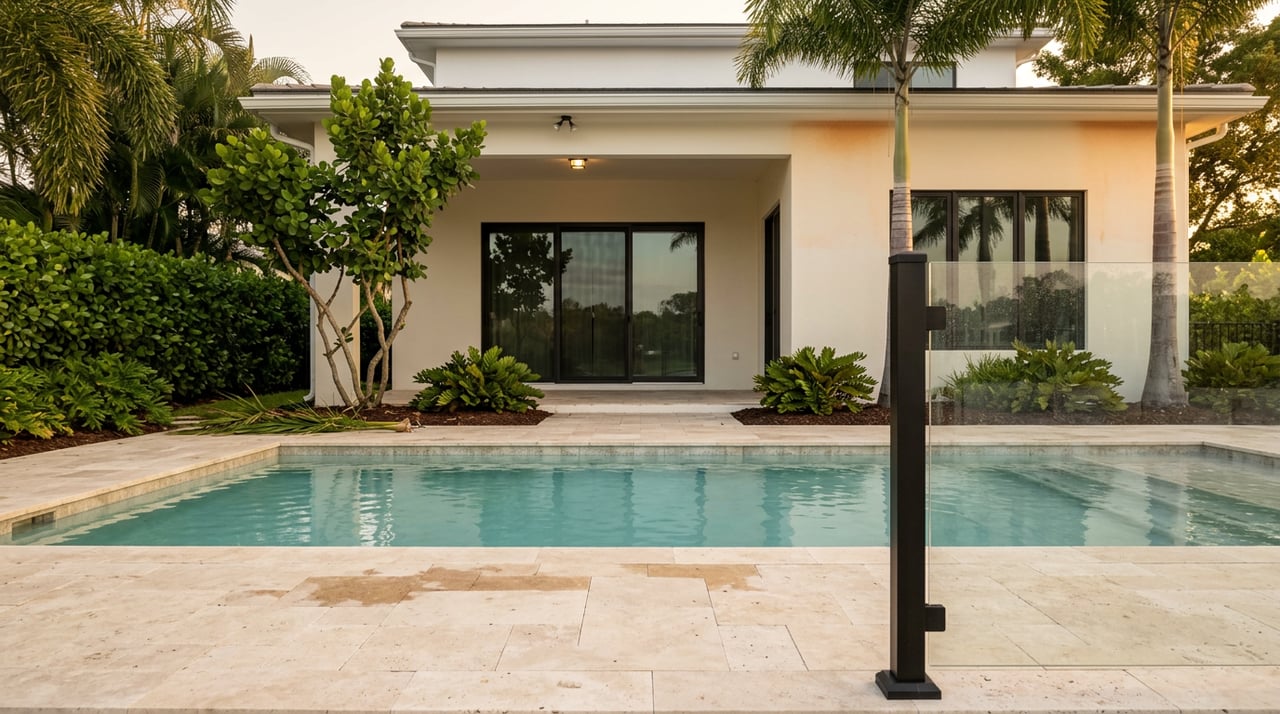
Something odd happened on the Las Olas Isles this year. Prices did not soften. By most measures they kept climbing. But the length of time a listing sits before it sells nearly doubled, and that gap between a strong price and a slow close is the part worth understanding before you put a waterfront home on the market here.
In January 2026, the median sale price on the isles reached $4.0 million, up 12.8 percent from the same month a year earlier. Only five homes sold that month, down from six the year before, which is normal for a market this thin. What was not normal was how long those five homes took to sell: 218 days on average, more than double the 100 days it took the prior January. Looking at the trailing twelve months of closed sales, the median sale price climbed even further, to roughly $4.65 million, up about a third from the prior twelve month period. So the isles are not seeing weaker demand. They are seeing longer diligence.
In a market with a handful of sales a month, a jump in days on market that size usually means buyers are asking for something before they write an offer that they were not asking for a year ago. On the isles, that something is a seawall paper trail.
In 2023, Fort Lauderdale changed its tidal barrier standard for new and substantially repaired seawalls, raising the required cap elevation from 3.9 feet to 5.0 feet on the NAVD88 datum. Projects permitted before January 1, 2035 can still be built to an interim 4 feet, but only if they are engineered to reach the full 5 feet by January 1, 2050. That transition window is the detail most buyer conversations skip past, and it matters, because it means a seawall built today under the interim allowance is not automatically the finished product a lender will expect a decade from now.
The city has not just written this rule down. It has built it, block by block, along the isles themselves. In August 2022, the City Commission approved a roughly $3 million agreement with Poseidon Dredge & Marine to replace about 790 linear feet of city-owned seawall along SE 10th Street and East Las Olas Boulevard. On Las Olas Isles specifically, crews rebuilt three city-owned segments along the south side of Las Olas Boulevard: between Lido Drive and San Marco Drive, between San Marco Drive and Coral Way, and between Coral Way and Royal Plaza Drive. Each segment was poured to the new 5-foot NAVD cap and paired with a new 15-inch stormwater pipe, a catch basin, and a tidal valve. That work wrapped up in summer 2024.
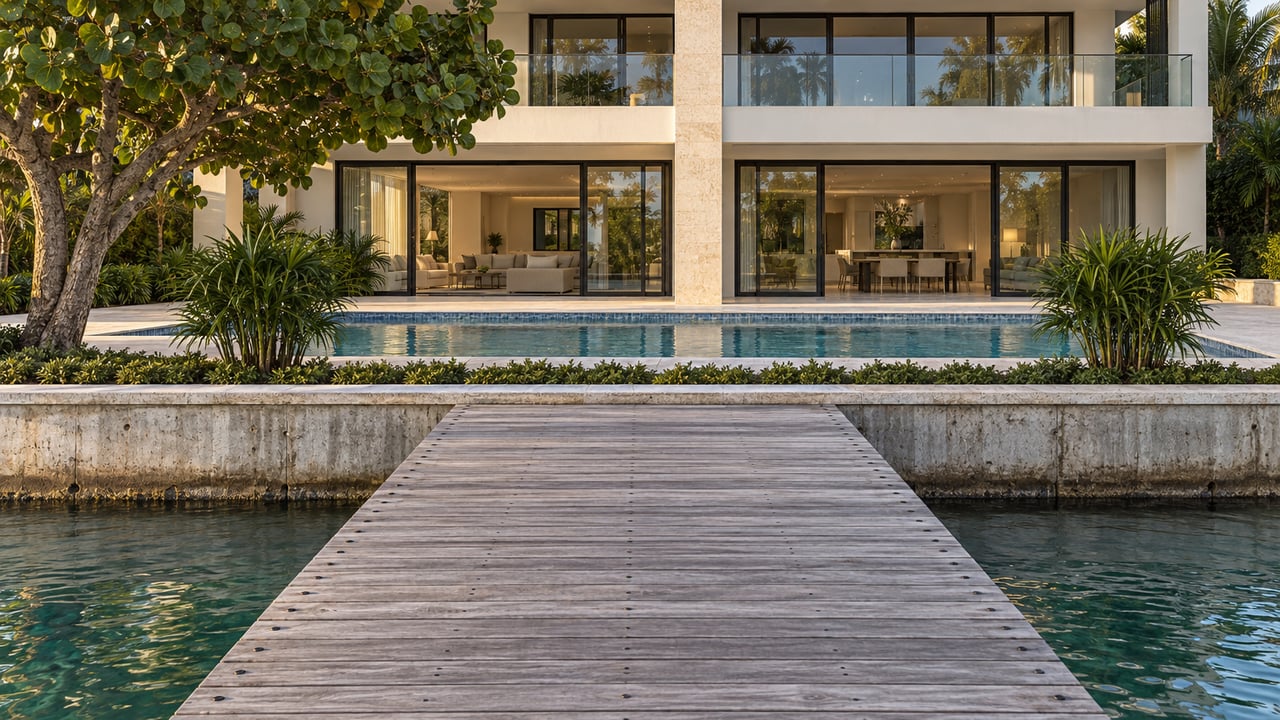
Walk the seawall along Las Olas Boulevard today and you are looking at concrete the city itself finished to the new standard less than two years ago. Any home that sold before that work was complete is a comp from a different regulatory era. Any home selling today sits next to physical proof of what compliance actually looks like.
This is where the extra 118 days start to make sense. Appraisers working waterfront files on the isles are now routinely running a cost-to-cure calculation on private seawalls, meaning they price out what it would take to bring a non-compliant wall up to the 5.0 NAVD standard and treat that number as a deduction, not a footnote. A wall that has never been touched can also read as functional obsolescence, which is a polite appraisal term for a structure that will need capital the buyer did not budget for.
Comparable sales complicate this further. A 2021 or 2022 closing on the same waterway tells a lender almost nothing about a 2026 file, because that older sale predates both the standard and the visible city work that now sits a few doors down. Appraisers pulling recent comps with documented, compliant seawalls can support a higher number, but during a transition period like this one, those clean comps are still rare, which is exactly why lenders lean harder on paperwork instead.
Here is roughly how that plays out for two otherwise identical listings on the same canal:
| Documented, compliant seawall | Undocumented condition | |
|---|---|---|
| Appraisal | Comp-supported, minimal adjustment | Cost-to-cure deduction applied |
| Lending | Moves on normal timeline | Lender may escrow funds pending repair |
| Buyer posture | Writes offer with confidence | Requests price reduction or walks during inspection |
| Disclosure conversation | Short, backed by permits | Extended, invites deeper buyer diligence |
The house on the left is not necessarily in better physical shape. It just has a file a lender can act on quickly. The house on the right may be identical below the waterline, but every extra week a buyer spends chasing down permit history is a week added to your days on market.
Florida law has required sellers to disclose known material defects that are not readily observable since the Florida Supreme Court's 1985 ruling in Johnson v. Davis, and the standard Florida Realtors disclosure form asks directly whether the seller knows of any past or present problems with the seawall due to drainage, flooding, or soil movement. Since October 2024, state law has also required a separate written flood disclosure at or before contract signing, and that requirement expanded again in October 2025 to cover any flood-related damage the seller is aware of during their ownership, not just formal insurance claims.
None of that is unusual for Florida waterfront property. What has changed on the isles is how early in a transaction buyers now expect to see it. A seawall's age, materials, prior repair history, and any engineering documentation tied to the 5.0 NAVD standard are increasingly requested alongside the disclosure form itself, not after an inspection turns something up. Sellers who can hand over that file on day one are answering the question buyers are already asking. Sellers who cannot are effectively inviting the buyer to spend the next several weeks finding the answer on their own, which shows up later as the same slow days-on-market pattern driving this year's numbers.
The fix is not complicated, but it has to happen before the listing goes live, not after an offer comes in.
The 218-day median is not a sign the isles have gone cold. It is a sign that documentation, not demand, is now the bottleneck. A seller who walks in with the seawall file already built is competing against homes that have not done that work yet, and that gap is where the extra four months on market actually gets spent.
Does the 5.0 foot NAVD88 standard apply to every seawall on the isles, or only the city-owned segments along the boulevard? The rule applies citywide to new seawalls and substantial repairs, private and municipal alike. The city-owned work along Las Olas Boulevard is simply the most visible, completed example of what compliance looks like in practice.
How much does raising a private seawall to the new height typically cost? Estimates for the height increase itself commonly run from roughly $500 to $1,000 per linear foot, with figures closer to $700 per foot cited as a working average. A full replacement, rather than a height increase alone, has been estimated in the $20,000 to $100,000-plus range depending on length, material, and site conditions.
Do I need to disclose seawall condition if I've never had a problem with it? Disclosure under Johnson v. Davis covers what you actually know. If you are not aware of any drainage, flooding, or soil movement issues, you disclose that honestly. The safer move for a smooth transaction is ordering a survey before listing so your knowledge and the property's actual condition match.
If you are weighing when to list a Las Olas Isles property, the seawall file matters as much as the finish package inside the house. Lauren Kahn Group works this stretch of waterfront regularly and can walk through what documentation your specific property needs before it goes to market. Contact Lauren for a personalized market consultation.
Stay up to date on the latest real estate trends.
With Lauren's help, you can easily find your dream home in South Florida. So what are you waiting for? Start searching today and be one step closer to finding the perfect place to call home!