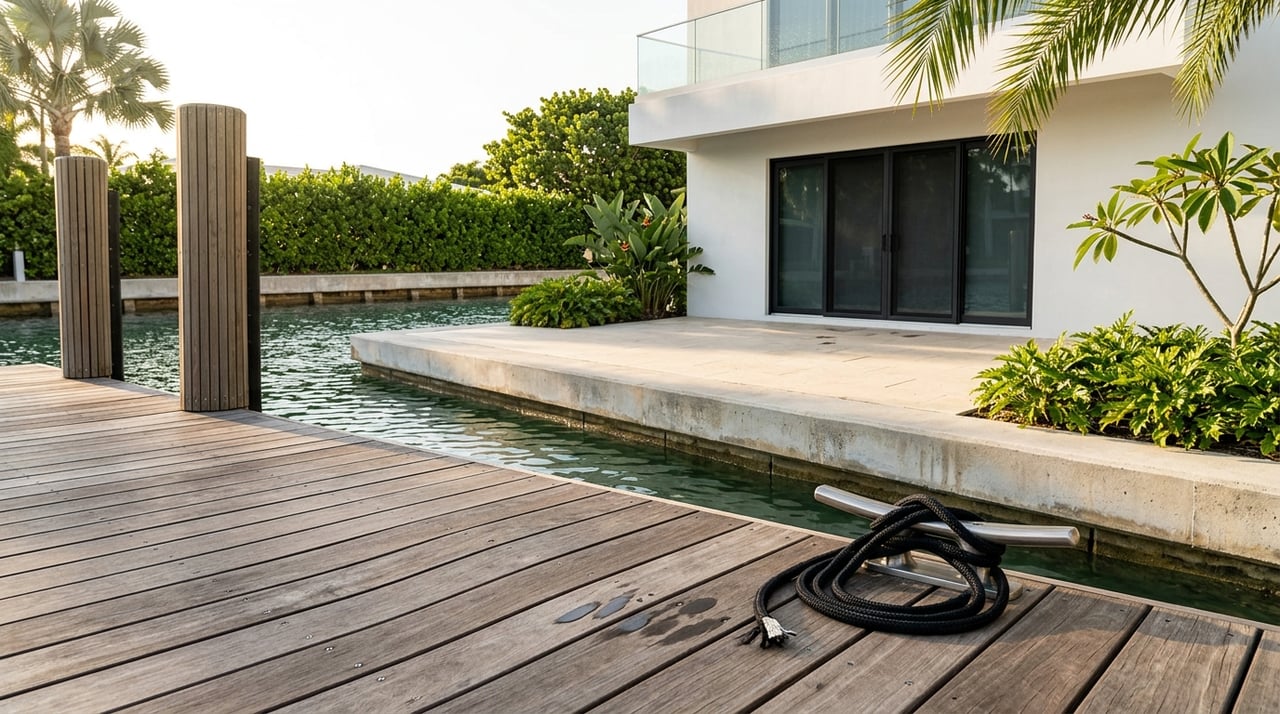
Boat Owner’s Guide To Buying In Las Olas Isles
April 9, 2026
April 9, 2026
Wondering if any waterfront home in Las Olas Isles will work for your boat? In this part of Fort Lauderdale, the answer is usually more specific than that. If you own a boat, the right purchase depends on how you use it, how your vessel fits the canal and dock, and what your route to open water actually looks like. This guide will help you focus on the details that matter most before you buy. Let’s dive in.
Las Olas Isles sits within Fort Lauderdale’s extensive canal system, a setting NOAA describes as part of a city known for many manmade canals and heavy seasonal yacht activity. That boating culture is a major draw, but it also means your buying decision should go beyond a simple “waterfront” label. Your real question is whether a specific property supports your boating routine well.
For many buyers, Las Olas Isles is less about the street name and more about route efficiency, dock function, and vessel fit. A home may look ideal on paper, but the real test is how easily you can move from that dock to the Intracoastal, New River corridor, or toward Port Everglades. NOAA notes that the area can include significant vessel traffic and swift, variable currents near the pilot buoy, which adds another layer to trip planning and daily use.
The neighborhood also reflects Fort Lauderdale’s ongoing resilience work. The city completed utility undergrounding in Las Olas Isles in 2024 and has also advanced seawall replacement efforts tied to tidal flooding and sea level rise. For you as a buyer, that means waterfront ownership here should be evaluated through both lifestyle and long-term maintenance.
A smart purchase in Las Olas Isles starts with your vessel, not just the house. Before you fall in love with a view or pool deck, you want to know whether the property can realistically support your boat’s beam, draft, air draft, and everyday maneuvering needs. That is what separates a good waterfront address from a truly usable one.
Your boat’s dimensions affect almost every part of the search. Air draft matters for bridge clearance, draft matters for route depth, and beam affects docking comfort and canal maneuverability. If you use your boat often, even a small inconvenience can become a recurring frustration.
A useful first step is to list:
Fort Lauderdale’s dock code is especially important in this market. Under the city code, boats moored to mooring structures cannot extend more than 30 percent of the canal or waterway width measured from the recorded property line. You can review that standard in the Fort Lauderdale code of ordinances.
That rule matters because frontage alone does not tell the full story. Dock length, canal width, setbacks, beam, and turning room all shape whether a property works well for your boat. A listing may advertise dockage, but the true question is whether the setup supports real-world use comfortably and within local rules.
In waterfront searches, buyers often hear broad estimates about canal widths or depths. Those figures may help with early screening, but they are not a substitute for property-specific verification. In Las Olas Isles, actual conditions can vary by block, canal, and dock layout.
That is why your due diligence should focus on the exact parcel. You want measured depth, pile spacing, dock configuration, lift capacity if applicable, and the condition of the seawall. This is especially important if you are buying from out of town and need confidence before closing.
In Las Olas Isles, getting from your dock to open water is often where the real decision happens. A home may have great dockage, but the route could still be less convenient than you expect. For boat owners, bridge clearances and operating patterns can shape the whole ownership experience.
According to NOAA’s Coast Pilot for this section of South Florida, nearby bridge clearances include:
For many buyers in Las Olas Isles, the Las Olas Boulevard bridge is the number that gets the most attention. If your boat has a higher air draft, that closed clearance can quickly affect which properties and routes make sense for you.
Bridge clearance is only part of the story. The operating schedule matters too, especially if you plan to use your boat regularly rather than seasonally. The current SE 17th Street Bridge schedule, effective February 19, 2026, allows openings on the hour and half-hour, with weekday rush-hour restrictions that limit openings to the top of the hour during certain morning and afternoon periods.
If your vessel can pass under without an opening, that offers more flexibility. If not, timing becomes part of your routine. For some owners, that is no issue. For others, especially frequent users, it can influence where they choose to buy.
NOAA also notes that New River near Tarpon Bend can be narrow with strong currents and that Stranahan River is a no-wake zone. Toward Port Everglades, the same NOAA guidance points to significant vessel traffic and swift, variable currents near the pilot buoy. You can review those navigation details in the same NOAA Coast Pilot reference.
This is why buyers should think in terms of route complexity, not just distance to the ocean. A shorter route is not always simpler, and an easy dock is not enough if the trip out does not fit how you boat.
Owning waterfront property in Las Olas Isles also means thinking about protection, maintenance, and future cost. Resilience is not a side issue here. It is part of the value equation.
Fort Lauderdale revised its tidal barrier ordinance to set the minimum seawall or tidal barrier height at 5 feet NAVD, up from 3.9 feet NAVD. According to the city, new seawalls, severely damaged seawalls, or seawalls cited for tidal flow breaching may need to be raised. You can read more in the city’s updated tidal barrier announcement.
That standard shows up in Las Olas Isles improvement work as well. The city has announced seawall replacement projects in the neighborhood with cap elevations of 5 feet NAVD to help reduce tidal flooding and prepare for king tides and sea level rise. For buyers, that makes seawall condition and height an essential part of pre-purchase review.
Flood insurance should be part of your planning from the start, not an afterthought after contract. FEMA explains that flood insurance is separate from homeowners insurance, and homes in high-risk flood areas with government-backed mortgages are required to carry it. FEMA also notes that NFIP policies usually have a 30-day waiting period unless an exception applies.
You can review those basics through FEMA’s flood insurance resource. FEMA also notes that an elevation certificate documents a property’s elevation and can help with obtaining flood insurance. That can make a meaningful difference as you compare homes.
In Las Olas Isles, strong due diligence helps you avoid expensive surprises. Waterfront homes can involve prior dock work, lifts, seawalls, permits, and repairs that are not obvious from photos or a quick showing. The more you verify before closing, the better positioned you are.
Fort Lauderdale maintains property records that can help you review prior construction and waterfront work. This is useful when you want to confirm whether past dock, lift, or seawall improvements were documented.
The city also outlines building permit FAQs that matter for waterfront buyers. For example, replacing dock decking requires a permit plus Broward County approval. If you are planning post-closing upgrades, it is smart to understand those requirements before you buy.
Before closing on a Las Olas Isles home, consider confirming:
A waterfront home can be a great fit on paper and still create avoidable issues if these details are skipped. In this neighborhood, the best decisions usually come from parcel-level review, not general assumptions.
Las Olas Isles is a high-intent boating market, and that is exactly why local guidance matters. The goal is not just finding you a waterfront address. It is helping you narrow the field to homes that truly align with your boat, your route preferences, and your long-term plans.
That can be especially valuable if you are relocating or buying from a distance. A hands-on local advisor can help you compare dock setups, identify route tradeoffs, review available property records, and keep your search grounded in how you actually plan to use the property. In a neighborhood like this, that practical layer of review can save time and reduce risk.
If you are considering a move to Las Olas Isles, the right support can make the process far more efficient. The Lauren Kahn Group at One Sotheby's Int'l Realty offers responsive, local guidance for Fort Lauderdale buyers who want a clear, informed path to the right waterfront property.
Stay up to date on the latest real estate trends.
With Lauren's help, you can easily find your dream home in South Florida. So what are you waiting for? Start searching today and be one step closer to finding the perfect place to call home!